KADANGOT MAKKAM BHAGAVATHI
KADANGOT MAKKAM BHAGAVATHI

When the story returns to the sacred ground
When the story returns to the sacred ground
When the story returns to the sacred ground
Makkam is not remembered only through story or image. At shrines across North Malabar, her memory returns through annual festivals, ritual song, offerings, percussion, costume, prayer and Theyyam. These occasions bring together family memory, community worship and performance. What survives in oral tradition becomes visible again before devotees.

The Theyyam Season
Theyyam is traditionally performed during the ritual season that begins in the Malayalam month of Thulam and continues until around the middle of Edavam, roughly from October to May.
Makkam Theyyam is usually performed during the later part of this season, with documented performances in Kumbham and Meenam, corresponding roughly to February and March.
The exact dates are determined locally and can vary from year to year.
The Theyyam Season
Theyyam is traditionally performed during the ritual season that begins in the Malayalam month of Thulam and continues until around the middle of Edavam, roughly from October to May.
Makkam Theyyam is usually performed during the later part of this season, with documented performances in Kumbham and Meenam, corresponding roughly to February and March.
The exact dates are determined locally and can vary from year to year.

Makkam’s Annual Festival Cycle
Makkam Theyyam is performed at several shrines associated with her tradition.
Documented 2026 festival dates include:
Kunhimangalam Aarooda Tharavadu Sree Kadankott Makkam Bhagavathi Kshetram
22–23 February 2026
Kumbham 10–11
Chala Sree Kadavankott Makkam Bhagavathi Kshetram
26–28 February 2026
Kumbham 14–16
Mattannur Kodolipram Sree Thannakkal Bhagavathi Kshetram
21–22 March 2026
Meenam 7–8
Koodali Poovathur Sree Chathoth Kadankot Makkam Bhagavathi Kshetram
23–25 March 2026
Meenam 9–11
Makkam’s Annual Festival Cycle
Makkam Theyyam is performed at several shrines associated with her tradition.
Documented 2026 festival dates include:
Kunhimangalam Aarooda Tharavadu Sree Kadankott Makkam Bhagavathi Kshetram
22–23 February 2026
Kumbham 10–11
Chala Sree Kadavankott Makkam Bhagavathi Kshetram
26–28 February 2026
Kumbham 14–16
Mattannur Kodolipram Sree Thannakkal Bhagavathi Kshetram
21–22 March 2026
Meenam 7–8
Koodali Poovathur Sree Chathoth Kadankot Makkam Bhagavathi Kshetram
23–25 March 2026
Meenam 9–11

Before the Theyyam Appears
The ritual begins long before the fully adorned Theyyam enters the sacred space.
Preparation may include fasting, prayer and ritual discipline by the performer. Kerala Tourism describes this preparatory observance as Vrutham, which can involve fasting, daily ritual practice, prayer, meditation and a disciplined lifestyle before the performance.
This reinforces an important point:
Theyyam is not a stage performance prepared only for an audience.
It is a ritual act.
Before the Theyyam Appears
The ritual begins long before the fully adorned Theyyam enters the sacred space.
Preparation may include fasting, prayer and ritual discipline by the performer. Kerala Tourism describes this preparatory observance as Vrutham, which can involve fasting, daily ritual practice, prayer, meditation and a disciplined lifestyle before the performance.
This reinforces an important point:
Theyyam is not a stage performance prepared only for an audience.
It is a ritual act.

Offerings
Published descriptions of Kadangott Makkam Theyyam list offerings such as:
red flowers
turmeric
coconut
rice
camphor
However, offerings can differ between shrines and local traditions.
For the website, I would phrase them as documented examples rather than imply that every Makkam shrine follows exactly the same ritual practice.
Offerings
Published descriptions of Kadangott Makkam Theyyam list offerings such as:
red flowers
turmeric
coconut
rice
camphor
However, offerings can differ between shrines and local traditions.
For the website, I would phrase them as documented examples rather than imply that every Makkam shrine follows exactly the same ritual practice.

The Sacred Space
The setting matters.
Theyyam traditionally belongs to:
kavus
family shrines
tharavadu compounds
temple courtyards
rather than conventional proscenium stages.
At Kunhimangalam, Kerala Tourism notes that the ancestral tharavadu associated with Makkam and the renovated temple continue within the same compound.
That physical connection between story, family and place is particularly important for Makkam.
The Sacred Space
The setting matters.
Theyyam traditionally belongs to:
kavus
family shrines
tharavadu compounds
temple courtyards
rather than conventional proscenium stages.
At Kunhimangalam, Kerala Tourism notes that the ancestral tharavadu associated with Makkam and the renovated temple continue within the same compound.
That physical connection between story, family and place is particularly important for Makkam.
Kaliyattam
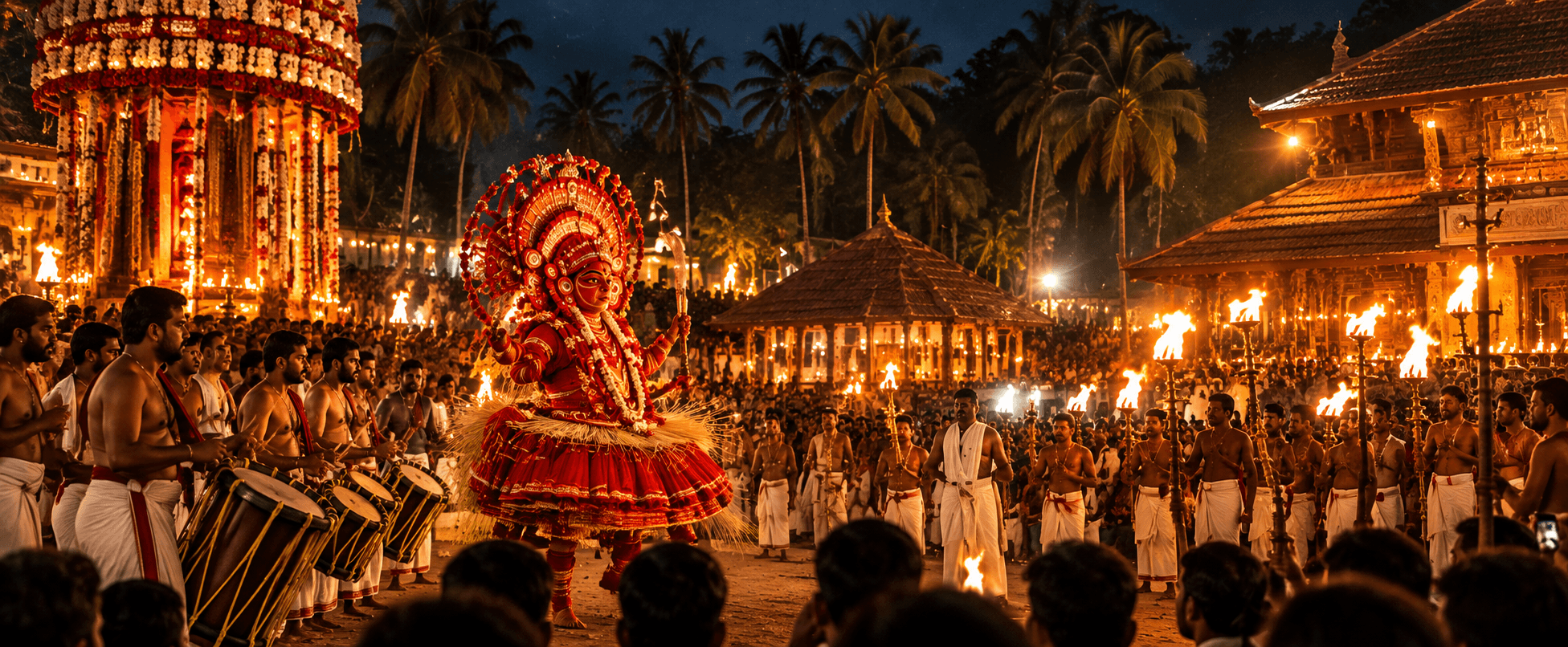
Large ritual festivals involving Theyyam are commonly known as Kaliyattam.
Kerala Tourism describes Kaliyattam as a grand Theyyam celebration organised by temples or prominent families; some locations also hold larger Perumkaliyattam festivals at much longer intervals.
These festivals are not simply collections of performances.
They reaffirm relationships between deity, shrine, family and community.
The Festival Through the Night
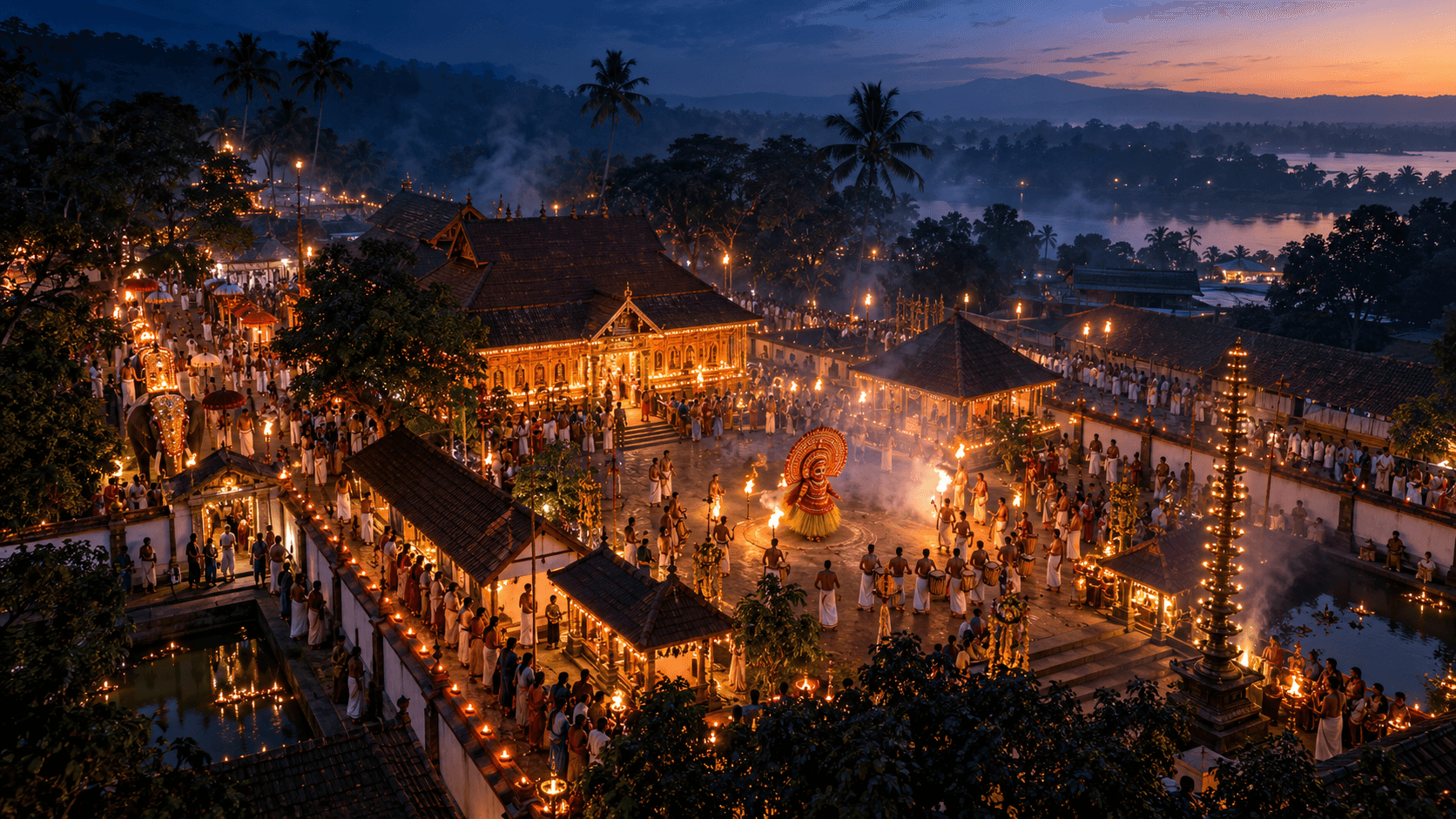
Many Theyyam rituals unfold across the night and into the early morning.
The experience changes with time.
Lamps replace daylight. Torches illuminate costume and face paint.
The sound of percussion carries through the shrine compound.
Thottam gives way to Theyyam. Eventually dawn arrives.
For a visitor, this progression is part of the experience rather than an inconvenience.
The Festival Through the Night
Many Theyyam rituals unfold across the night and into the early morning.
The experience changes with time.
Lamps replace daylight. Torches illuminate costume and face paint.
The sound of percussion carries through the shrine compound.
Thottam gives way to Theyyam. Eventually dawn arrives.
For a visitor, this progression is part of the experience rather than an inconvenience.