The Story
The Story of Kadangot Makkam
A story of love, betrayal, injustice and divine remembrance
The story of Kadangot Makkam belongs to the living folklore of North Malabar. It survives through Theyyam, thottam pattu, oral tradition and later written retellings.
Different versions preserve slightly different details, but the central story remains the same: Makkam, a beloved sister and mother, was falsely accused, betrayed by members of her own family, killed with her children, and later revered as a divine presence. Today she is worshipped through the Theyyam traditions known as Makkappothi and Makkavum Makkalum — Makkam and her children.

01. The Long-Awaited Daughter
Tradition places Makkam in the famous Kadangot family of Kunhimangalam in North Malabar.
The family was associated with warriors who served the Kolathiri rulers. Accounts describe Makkam as the much-awaited daughter born into a household of many sons. She grew up surrounded by brothers who cherished her deeply.
In several tellings, her parents are named Unnichiriyamma and Kunjikoman, while Makkam is remembered as the only daughter among twelve warrior brothers.
From the beginning, the tradition presents her not as an ordinary child of the household, but as someone whose arrival followed years of prayer and longing.
02. Makkam and Her Children
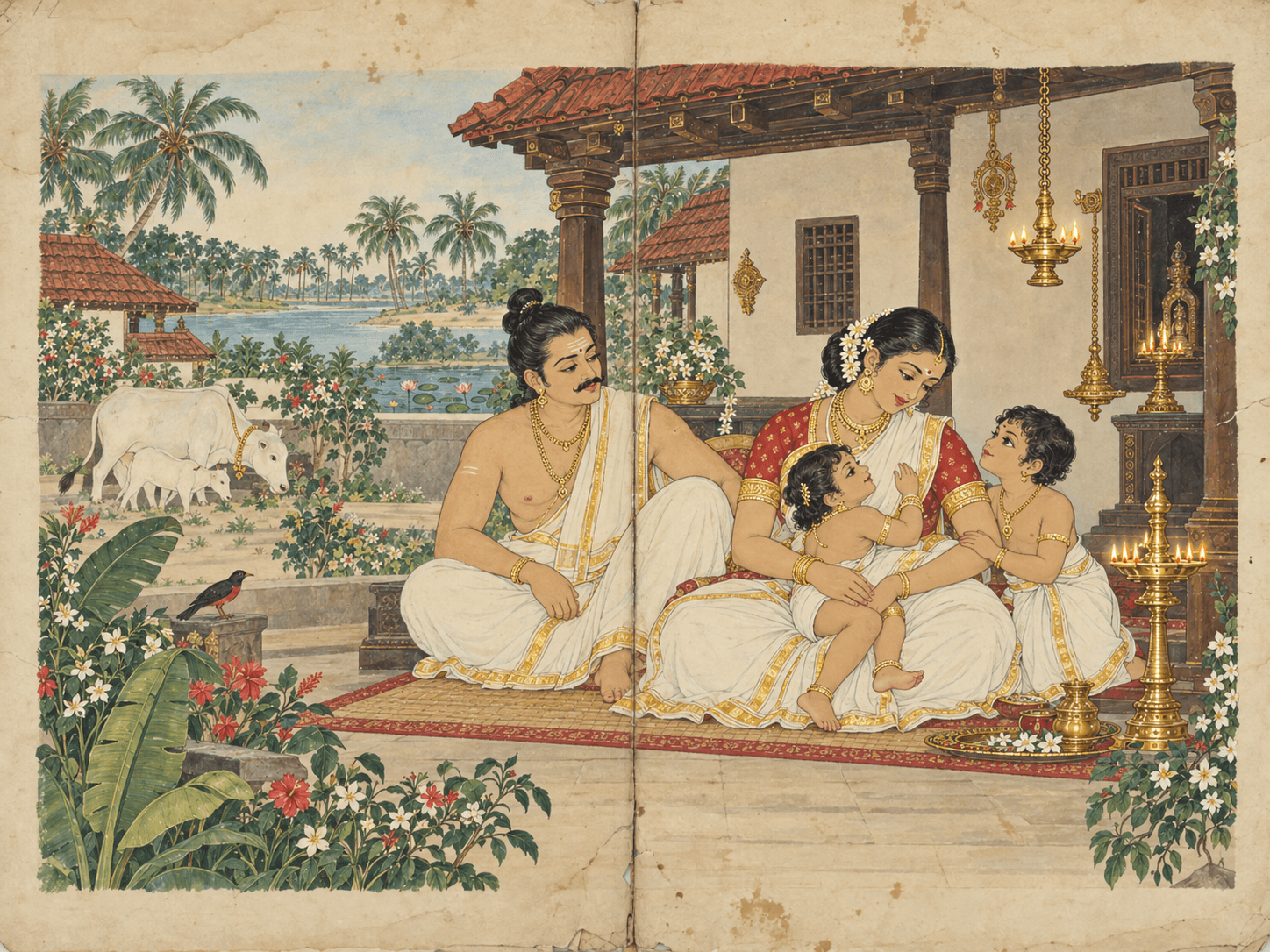
Makkam eventually married Kutti Nambiar and became the mother of two children, traditionally named Chathu and Chiru.
Motherhood becomes inseparable from the way Makkam is remembered.
Even today, the ritual tradition does not remember her alone. One of the names by which her Theyyam is known is Makkavum Makkalum, literally “Makkam and her children.”
The three become part of the same sacred memory..

03. Tension Within the Household
According to the traditional narrative, Makkam continued to have an important place within her ancestral family.
Some versions connect the conflict that followed with the matrilineal customs then prevalent in the region. Makkam and her children could remain connected to the ancestral household and its property, creating resentment among her sisters-in-law. Other tellings emphasise their jealousy of the affection Makkam received from her brothers.
Whatever the precise motive preserved in a particular version, the story gradually moves from affection to suspicion.
And that suspicion eventually becomes a conspiracy.
04. The Oil Seller
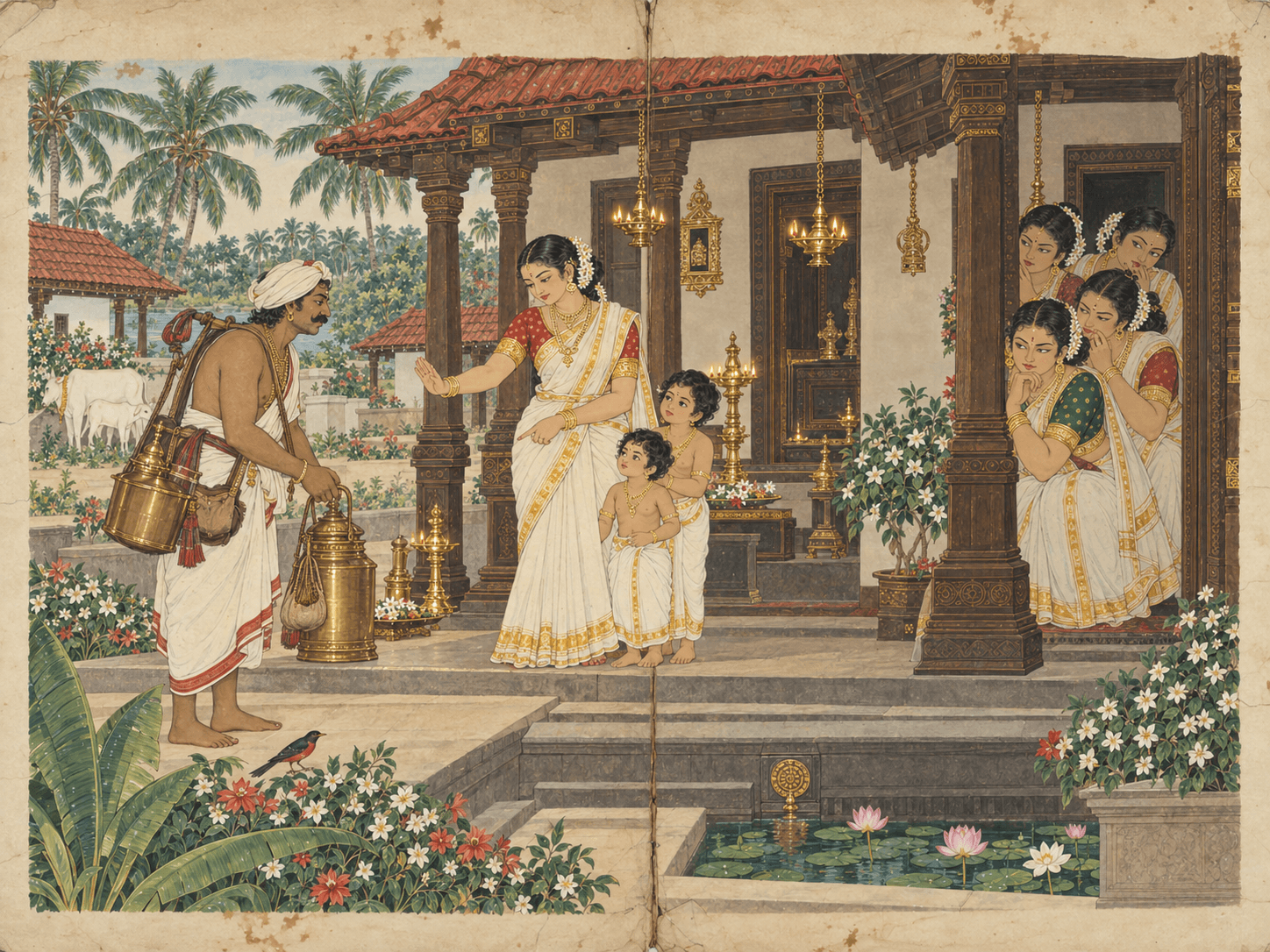
The decisive incident involves a Vaniyan, traditionally described as an oil seller who regularly visited the household.
When the brothers were away, the oil seller arrived as usual.
According to the legend, the sisters-in-law deliberately withdrew from sight. Makkam, unable to receive the oil herself under the circumstances described in the traditional account, instructed the man to place the oil inside the house.
When he emerged, the situation was deliberately misrepresented.
Makkam was accused of having an improper relationship with him.
The accusation was false.
But it was enough.

05. The Brothers Believe the Accusation
When the brothers returned, their wives repeated the allegation.
The men who had once cherished Makkam accepted the accusation without establishing the truth.
According to the tradition, eleven of the brothers decided that Makkam must die.
The youngest brother, commonly remembered as Kutti Rama, refused to participate. He and his wife separated themselves from the decision.
This refusal later becomes important in the story.

06. The Journey
The brothers did not openly tell Makkam what they intended.
Instead, she and her children were invited to accompany them on a journey, traditionally described as a trip to see a festival or lamp ceremony at Kottayam.
Makkam is said to have sensed that something was wrong.
Before leaving, she entered the shrine of her family deity, Veera Chamundi, lit a lamp and prayed that the truth of her innocence would one day become known.
Then she left with her brothers.
Her children went with her.

07. A Journey Through Sacred Places
The journey itself occupies an important place in many retellings.
Makkam is remembered as praying at shrines along the route. Some traditions specifically mention places associated with Madayikkavu, Kalarivathukkal Bhagavathi and Kadalayi Krishna.
This part of the narrative transforms the journey from a simple movement between places into something closer to a final pilgrimage.
Makkam continues forward even though she senses danger.

08. The House at Chala
By the time Makkam and her children reached Chala, they were exhausted and thirsty.
They were directed to a nearby household, traditionally remembered as Puthiya Pura / Puthiya Veedu.
An elderly woman of the house welcomed them and gave Makkam and the children milk.
Makkam accepted the hospitality and, according to different tellings, left behind a ring or pieces of jewellery in the vessel as a gesture of gratitude.
This brief moment of kindness becomes extremely important later in the tradition.
Chala would eventually become closely associated with Makkam's worship.

09. The Well at Achankarappalli
The journey continued.
Near Achankarappalli, in the Kayalode area, the group reached a well.
Here the story reaches its most tragic moment.
According to the traditional narrative, the brothers attacked Makkam and her children and killed them. Their bodies were thrown into the well.
A man identified in the tradition as a Mavilan, who witnessed what happened, was also killed.
He too would later be remembered within the ritual tradition.

10. The Innocence of Makkam
The brothers returned home.
But the story did not end at the well.
Tradition says that destruction soon came upon the ancestral household. The Kadangot family home was consumed by fire, while the place associated with Veera Chamundi remained untouched.
The brothers and their wives who had participated in the injustice met disastrous ends.The youngest brother and his wife, who had refused to take part, were spared. What had been treated as guilt was now understood as innocence.
Makkam had been wronged.

11. Makkam Returns to Chala
The earlier act of kindness at Chala now becomes significant.
Tradition says Makkam appeared in a dream to the woman of the household who had offered milk to her and her children.
She asked that a place of worship be established for them.
Makkam, her children and the Mavilan who had died with them subsequently came to be worshipped there.
The house that had once offered a thirsty mother and her children refuge became connected to their continuing sacred presence.
Makkavum Makkalum
Makkam's memory survives most powerfully through Theyyam.Her ritual form is known as Makkappothi, and the collective representation of Makkam with Chathu and Chiru is known as: Makkavum Makkalum (Makkam and Her Children)
The performance does more than depict an old legend. Through costume, music, thottam pattu, percussion and ritual transformation, the events of the story are recalled again before a living community. Makkam, her children and the Mavilan witness are all remembered within this tradition.
A Story Preserved Through Generations
Makkam's story existed for generations through oral and ritual traditions. It also entered written literature. A Malayalam kilippattu version titled Kadangot Makkam was published in 1918, attributed to K. M. Kunjilakshmi Kuteilamba, Kuttamath Kanyoor Kunhikrishna Kurup and K. M. K. Nair.
The existence of these different forms is important. There is no single modern text from which the entire tradition originated. Makkam's story lives simultaneously in song, oral memory, ritual performance, local geography and written retelling
.
Why the Story Endures
At its heart, Makkam's story contains a remarkably human sequence:
Love → Jealousy → Accusation → Betrayal → Death → Truth → Remembrance
It is a story about what can happen when accusation replaces evidence and when those closest to a person choose suspicion over trust.But within the communities that preserve the tradition, Makkam is not simply a tragic character from folklore.
She is worshipped. Her children are remembered with her. And through Theyyam, a tragedy from the past is repeatedly brought into the present.